myCCC

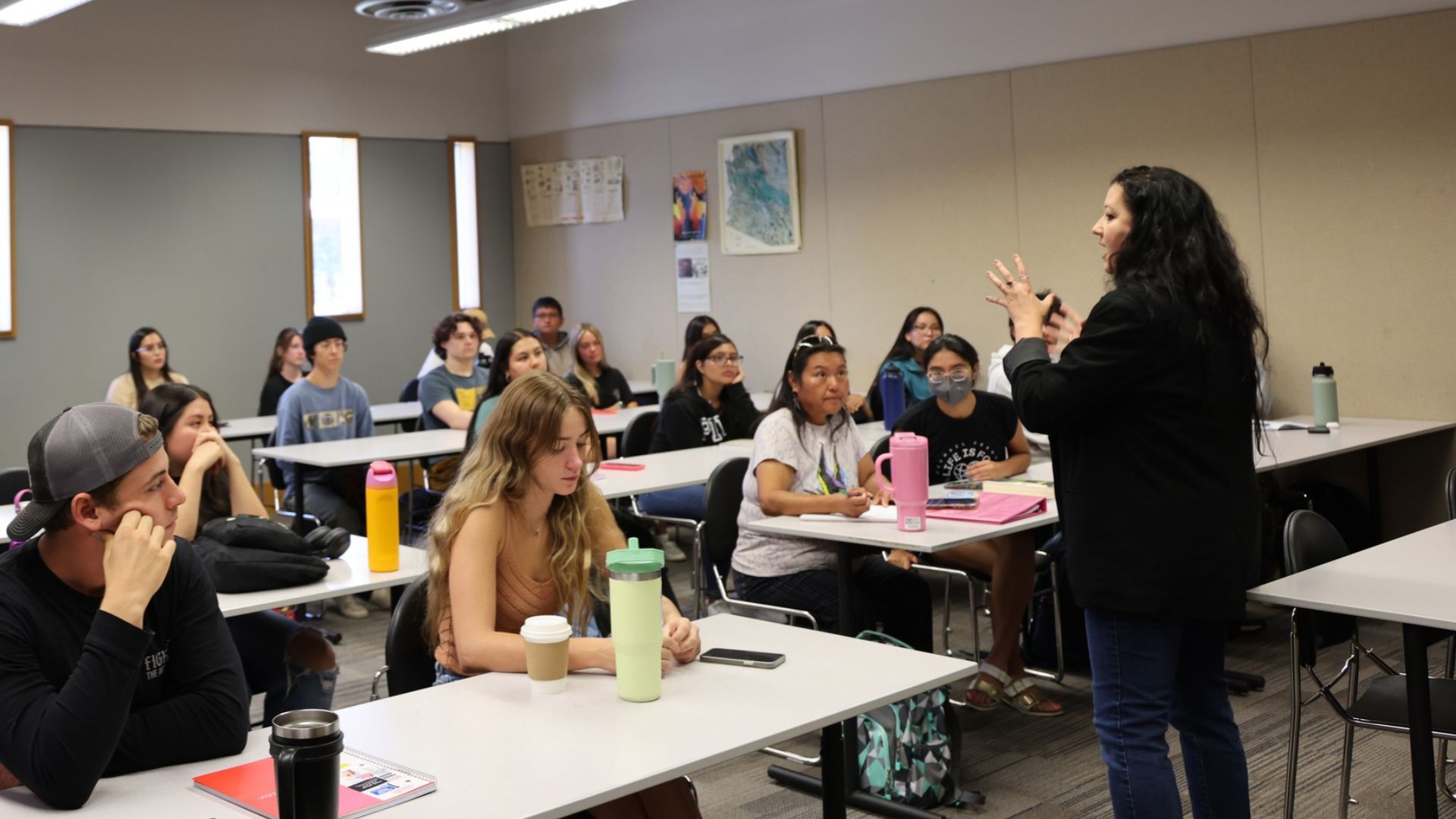

Why do we think, act, and live the way we do? These three subjects offer different ways to understand people. Anthropology explores humans and cultures across time and around the world. Psychology examines the mind and behavior. Sociology looks at groups, communities, and the ways society shapes our lives.
Follow your curiosity while building skills in research, critical thinking, and understanding different perspectives. Get to know each subject below to find what interests you.
You can start taking the general education classes you need for a bachelor’s degree at CCC. The Arizona General Education Curriculum (AGEC) includes approved classes in writing, math, science, humanities, and social and behavioral sciences. Completing the full AGEC at CCC meets the general education requirements usually taken during the first two years at Arizona State University (ASU), Northern Arizona University (NAU), and the University of Arizona (U of A).
Depending on the course, approved anthropology, psychology, and sociology classes may meet requirements in Arts and Humanities, Quantitative Reasoning, Natural Sciences, Social and Behavioral Sciences, or Institutions in the Americas. Some courses are approved for more than one category, but how they count depends on your degree requirements. Not every class will count toward every degree. Before registering, meet with an academic advisor to choose classes that fit the university and bachelor’s degree you want. Planning early can help you avoid taking classes you do not need.
There are many ways to be human. What can an ancient tool tell us about the person who used it? Why do traditions differ across communities? Anthropology studies humans across time and around the world, bringing together culture, biology, language, and the objects people leave behind.
If you’re curious about how people have lived in different places and times, consider questions like these:
Culture and community: How do beliefs, traditions, and daily routines shape people’s lives?
Human origins: What can fossils and other evidence tell us about human evolution?
Archaeology: What can tools, buildings, and everyday objects reveal about the past?
Language and meaning: How do people use language to share ideas and express identity?
Cultural change: How do communities respond to contact, migration, and new ways of living?
Financial Aid Eligible
In-Person Classes
Online Classes
Hybrid learning required
Evening Classes Available
Transferrable
Military Education Benefits Eligible
Limited start dates
Skills You Can Build
Students develop skills that can help them:
Your way of seeing the world is one of many. Anthropology helps you understand unfamiliar customs, question assumptions, and consider situations from another person’s perspective. That understanding can help you work with people from different backgrounds and think carefully about how communities respond to change.
Observe closely: Notice patterns and details before drawing conclusions.
Consider different perspectives: Examine beliefs and practices within their cultural context.
Interpret evidence: Use objects, observations, and research to support an explanation.
Question assumptions: Recognize how your own experiences influence what you think is normal.
Anthropology courses can introduce you to further study in anthropology or bring a cultural perspective to fields such as education, health care, business, and public service. An academic advisor can help you choose courses that fit your degree requirements and transfer plans.
Get curious about what makes us tick. Why do some memories stay with us while others fade? How do habits form? Psychology is the scientific study of the mind and behavior. Examine how people think, feel, learn, and change—and how researchers study the reasons behind our actions.
If you’ve ever wondered why you or someone else acted a certain way, psychology gives you questions worth investigating:
Learning and memory: How do we take in, store, and recall information?
Human development: How do thinking and behavior change throughout life?
Emotion and motivation: What influences how we feel and what we choose to do?
Social influence: How do other people affect our decisions and behavior?
Mental health: How do psychologists study mental health conditions and approaches to treatment?
Financial Aid Eligible
In-Person Classes
Online Classes
Hybrid learning required
Evening Classes Available
Transferrable
Military Education Benefits Eligible
Limited start dates
Skills You Can Build
Students develop skills that can help them:
Psychology connects to everyday experiences, from preparing for an exam to handling a disagreement. Studying it can help you reflect on your own behavior, understand others, and assess the advice you hear about learning, relationships, and well-being.
Evaluate claims: Ask what evidence supports a statement about human behavior.
Interpret research: Make sense of findings and recognize what a study can—and cannot—tell you.
Consider multiple explanations: Look beyond a first impression when thinking about someone’s actions.
Apply what you learn: Connect research on memory, learning, and motivation to everyday situations.
Psychology courses can introduce you to further study in psychology or help you understand human behavior in fields such as education, health care, business, and communication. An academic advisor can help you choose courses that fit your degree requirements and transfer plans.
See the bigger picture behind everyday life. How does your neighborhood shape your opportunities? Who decides what counts as normal? Sociology studies how people form groups and how society influences our lives. Connect individual experiences to larger patterns in families, schools, workplaces, and communities.
If you’re interested in people, communities, or social change, consider questions like these:
Social expectations: How do we learn the spoken and unspoken rules of everyday life?
Groups and belonging: How do families, friendships, and communities shape identity?
Institutions and power: How do schools, governments, and workplaces influence people’s choices?
Opportunity and inequality: Why do resources and opportunities vary across groups?
Social change: How do people organize to change their communities?
Financial Aid Eligible
In-Person Classes
Online Classes
Hybrid learning required
Evening Classes Available
Transferrable
Military Education Benefits Eligible
Limited start dates
Skills You Can Build
Students develop skills that can help them:
A challenge that seems personal may be part of a wider pattern. Sociology helps you examine how factors such as housing, education, work, and public policy affect people’s lives. It gives you ways to investigate community issues and consider how decisions affect different groups.
Recognize patterns: Connect individual experiences to broader social trends.
Analyze information: Use research and data to examine claims about society.
Ask better questions: Consider whose experiences are represented and whose may be missing.
Assess possible solutions: Examine how a policy or decision could affect different communities.
Sociology courses can introduce you to further study in sociology or help you understand social issues in fields such as social services, education, public health, business, and government. An academic advisor can help you choose courses that fit your degree requirements and transfer plans.
No. Many students begin with general education courses before deciding on a specific area of focus. If you have a general interest in anthropology, psychology, sociology, or social work, an advisor can help you choose courses that count toward your AGEC and align with your likely transfer major at the same time.
Yes, when completed as part of the AGEC. The Arizona General Education Curriculum is a statewide agreement that guarantees your general education credits transfer as a block to ASU, NAU, and the U of A. If you complete the AGEC with a 2.5 GPA, you are also guaranteed unconditional admission to any of those universities.
Approved courses can count toward the social and behavioral sciences category of the Arizona General Education Curriculum. Some courses may meet other AGEC requirements or count as electives. Your advisor can help you choose courses that apply to your degree and transfer plans.
Anthropology explores humans and cultures across time and around the world. Psychology studies the mind and behavior. Sociology examines groups, communities, and how society shapes our lives. The subjects often explore similar questions from different perspectives.
No. These subjects can complement many majors or give you a chance to try something new. Check course prerequisites before registering, and talk with an advisor about how a class fits your academic plan.
Yes. All CCC classes are open to everyone as long as you have completed any prerequisites. However, taking a class outside of your degree will not be covered by financial aid, including money from the Pell grant, federal student loans, and military education benefits. You need plan to cover the expenses for any classes outside of your degree out-of-pocket.
That depends on what you want to study and where you plan to transfer. CCC has university guides for anthropology, psychology, sociology, and social work that outline recommended course order for students planning to transfer to NAU, ASU, and the U of A. Your advisor can walk you through those guides and help you build a plan that gets you to your goal without taking courses you do not need.
These subjects provide useful foundations for fields such as education, health care, social services, business, research, and public service. You can also pursue further study to work in anthropology, psychology, or sociology. Career requirements vary, and some roles require graduate education or professional credentials.
We are here to help. Complete the form to get in contact with admissions, campus tours, and more.
Our admissions team is ready to get you started. Fill out our free, 10-minute application to build the future you want.
Complete the form to get in contact with admissions, campus tours, and more.