myCCC

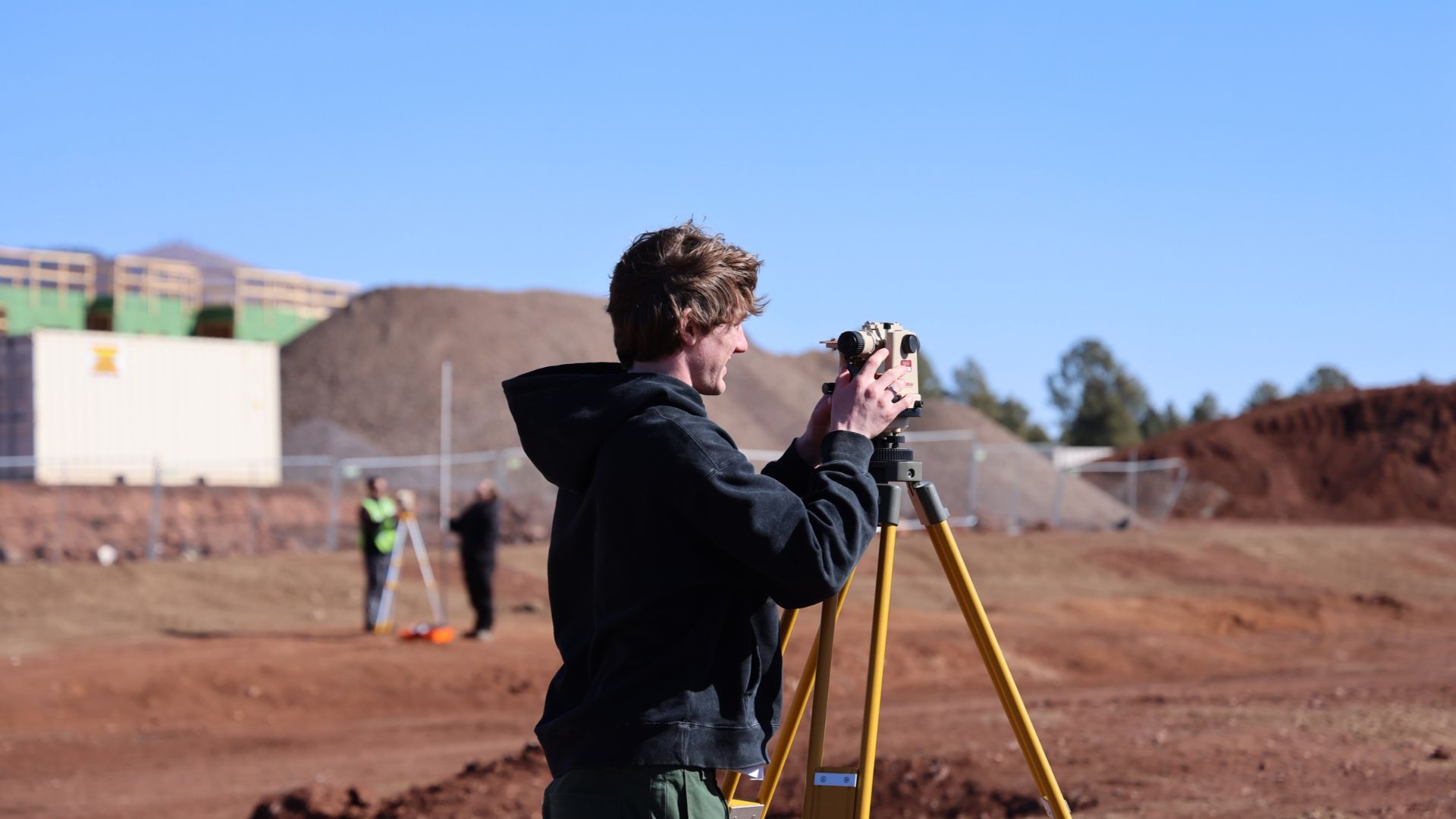

Build practical skills for careers in construction, electrical work, heating and cooling, sustainable building, and other skilled trades. CCC combines classroom learning with hands-on training so you can learn how buildings and systems are planned, built, maintained, and improved.
CCC offers the following programs:
Civil Horizontal Construction Technician Certificate
Drafting and Building Design (Coming Fall 2027)

CCC construction students have built real homes for Northern Arizona families through a partnership with Habitat for Humanity of Northern Arizona. This partnership gives students intensive hands-on experience in residential construction while directly contributing to the community.
Start with the Construction Technology Certificate for broad, hands-on construction skills, or choose a specialized certificate if you want to focus on electrical or heating and cooling work. Associate of Applied Science degrees provide broader workforce preparation, while experienced journeymen have a degree pathway that recognizes completed apprenticeship training. If your goal is a bachelor’s degree in Construction Management, CCC also offers a dedicated transfer path to Northern Arizona University (NAU).
Look for these icons that describe important features of each degree or certificate.
Financial Aid Eligible
In-Person Required
Completely Available Online
Hybrid Required
Evening classes available
Transferrable
Military education benefits eligible
Limited start dates
Financial Aid Eligible
In-Person Required
Completely Available Online
Hybrid Required
Transferrable
Evening classes available
Military education benefits eligible
Limited start dates
The Civil Horizontal Construction Technician Certificate prepares students for entry-level employment in civil and horizontal construction fields, including roadway construction, site development, grading and excavation, utility installation, and public works infrastructure projects.
Best for students who want broad, hands-on construction skills in a shorter program or want to start building toward the Construction Technology AAS
Credential: Certificate
Primary goal: Entry-level workforce preparation
Credits: 27
Typical completion time: Full-time students who average 15 credit hours a semester can finish in two semesters.
Financial Aid Eligible
In-Person Classes
Online Classes
Hybrid learning required
Evening Classes Available
Transferrable
Military Education Benefits Eligible
Limited start dates
Skills You Can Build
Students develop skills that can help them:
Follow basic jobsite safety practices
Use construction math
Understand basic construction methods and technologies
Read and work with basic blueprints and specifications
Use construction tools and equipment safely
Understand how different building systems work together
Apply practical skills in hands-on construction settings
Prepare for construction safety credentials, with opportunities for industry certification through CCC construction coursework
Psychology connects to everyday experiences, from preparing for an exam to handling a disagreement. Studying it can help you reflect on your own behavior, understand others, and assess the advice you hear about learning, relationships, and well-being.
[INDUSTRY CREDENTIALS HERE]
Some CCC construction programs include coursework that prepares students for industry certifications, and certain certification exams or testing opportunities may be built into the curriculum. Completing the course does not guarantee that you will pass the certification exam. Other credentials, such as contractor licenses or trade-specific licenses, may still require additional work experience, apprenticeship hours, testing, or state approval after graduation. Talk with CCC Construction Technology faculty about which certifications are included in your program and what additional steps may be needed for your career.
The Civil Horizontal Construction Technician certificates are designed for workforce preparation, not university transfer. If you plan to earn a bachelor’s degree in engineering, construction management, sustainability, or another related field, work with an academic advisor to complete a general Associate of Arts (AA) or Associate of Science (AS) instead. You may still be able to include some technical courses depending on your degree requirements. Technical transfer programs may require advanced math. Complete math placement early and meet with an academic advisor before registering so you start in the right math pathway for your intended university and major.
Your CCC education can be a strong first step toward a career in this field. The careers below show some of the possibilities, but certain jobs may require additional education, experience, certification, or licensure. Use the career outlook tool to explore data for Coconino County or the United States, and talk with an advisor or faculty member about the path that fits your goals.
Certificates are designed for students seeking focused workforce training and a faster path into the industry. Associate degrees provides broader technical and management-focused coursework that may support additional career advancement opportunities. Consider your short and long-term goals to decide what is a better fit for you.
Yes. Credits earned in the Construction Technology Certificate apply directly toward the AAS degree. Completing the certificate is a step toward the degree, not a separate track.
The Construction and Industry Trades AAS is designed specifically for Certified Journeymen who can document completion of 6,000 hours of apprenticeship training. Contact an advisor to discuss how your documentation supports enrollment.
It depends on your long-term goals. If you want to enter the workforce quickly, the AAS prepares you for construction management and supervisory roles. If you want to pursue a bachelor’s degree in Construction Management, the Construction Technology Management AA is the transfer pathway designed for that goal. Speak with an advisor before enrolling.
The Construction Technology, Electrical Technology, and HVACr programs are designed to help students build technical skills through coursework and hands-on training. The Construction and Industry Trades AAS is different: it is only available to certified journeymen who have already completed qualifying apprenticeship and trade requirements.
No. Associate of Applied Science degrees are designed mainly for workforce preparation. Students who want to transfer to a university should consider a general Associate of Arts or Associate of Sciences. If you are interested in Construction Management, you should consider CCC’s Construction Technology Management AA.
Some CCC construction programs include coursework that prepares students for industry certifications, and certain certification exams or testing opportunities may be built into the curriculum. Completing the course does not guarantee that you will pass the certification exam.
Other credentials, such as contractor licenses or trade-specific licenses, may still require additional work experience, apprenticeship hours, testing, or state approval after graduation.
Math requirements vary by program. The Construction Technology Management transfer degree requires more advanced math than CCC’s workforce-focused construction programs. Complete math placement early and meet with an academic advisor before registering so you start in the right math pathway.
We are here to help. Complete the form to get in contact with admissions, campus tours, and more.
Our admissions team is ready to get you started. Fill out our free, 10-minute application to build the future you want.
Complete the form to get in contact with admissions, campus tours, and more.